
NEWS
Protecting & Caring: Inside Sudan’s Emergency Response Rooms
Community is everything – particularly when caught at the crossfires of war. Through our Informed Communities Mobilized Against Corruption (ICMAC) program in Sudan, we worked with journalists to document and publish stories like Noha’s. We want the public in Sudan and beyond to know how millions are being swallowed by a war power-seeking factions not thinking about the wounds and destruction they are leaving behind.
Noha’s experience sheds light on how both the RSF and SAF are not just at war with each other, but at war with the Sudanese people. Greed and corruption keep sabotaging communities’ efforts to self-organize and respond to their own needs. This is why we have created ICMAC: to support communities on the ground who refuse to give up. Together, we build resilience and power amongst those fighting for accountability and strengthening the intersections of human rights protection with journalism and legal capabilities. The goal is to unveil the truth, connect the dots, and activate the right mechanisms so justice can be found.
Below you can read Noha’s voice reaching far beyond Sennar’s crowded emergency response rooms and Kampala’s hopeful waiting rooms, where Sudanese refugees patiently bide for a future back home. Sennar State borders Ethiopia and the Blue Nile State, both of which are experiencing active fighting along their shared boundaries. This instability has directly impacted Sennar, forcing thousands of Sudanese people to flee their homes to escape clashes between the Sudanese Armed Forces (SAF) and the Rapid Support Forces (RSF).
Noha Youssef Ali from Sennar city is a mother of two and a Medical Laboratory Specialist. With an uplifting personality, she greeted us at her residence in Kampala, Uganda, where she is in exile now – after spending six months leading relief efforts for displaced people from Khartoum State and other states affected by the April 15, 2023 war.
Noha is a founding member of the Women Pioneers Association, which launched an appeal to civil society organizations and service providers in Sennar to establish an emergency health center just three days after the start of the war – on April 18, 2023. She served as the health coordinator for the center. During the first months of the conflict, the Emergency Center remained operational and responsive, despite the number of displaced people doubling. Noha described Sennar as a “gateway for displaced people” to other Sudanese states like Blue Nile, Kordofan, and White Nile.
“Before the war, we were able to provide services better. After the war, we faced many severe challenges, including shortages of all supplies for health services.” Some refugees chose to continue their displacement to states further away from the fighting while others decided to stay in Sennar, which gradually increased the pressure on the infrastructure of the city and eventually, also the state.
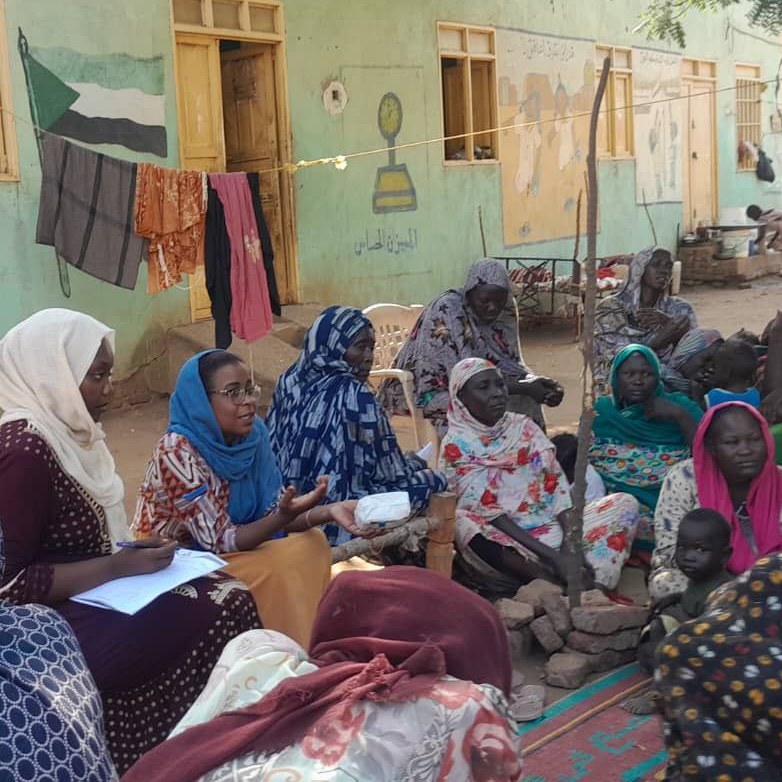
“The Emergency Center’s work at that time seemed limited to providing services to those passing through the city entrance. I remember during Ramadan, we provided Iftar (the evening meal to break the fast in Ramadan) along with basic health services. We responded to health emergencies, like providing insulin to patients with chronic illnesses who couldn’t access their medication. This continued for about three or four days, but then the number of displaced people became simply overwhelming. They were standing in the streets, and the houses were full. So, we established a shelter in the city center and issued an appeal for any displaced person without shelter to come to the shelter.” The shelter in the city center quickly filled up, and the organization had to take the initiative to open more shelters to cope with the increasing number of displaced people. “There were approximately 13 shelters. The first one opened on April 22, 2023, and as the number of displaced people increased, more shelters were established until there were 13. Each shelter housed between 650 and 700 displaced people.”
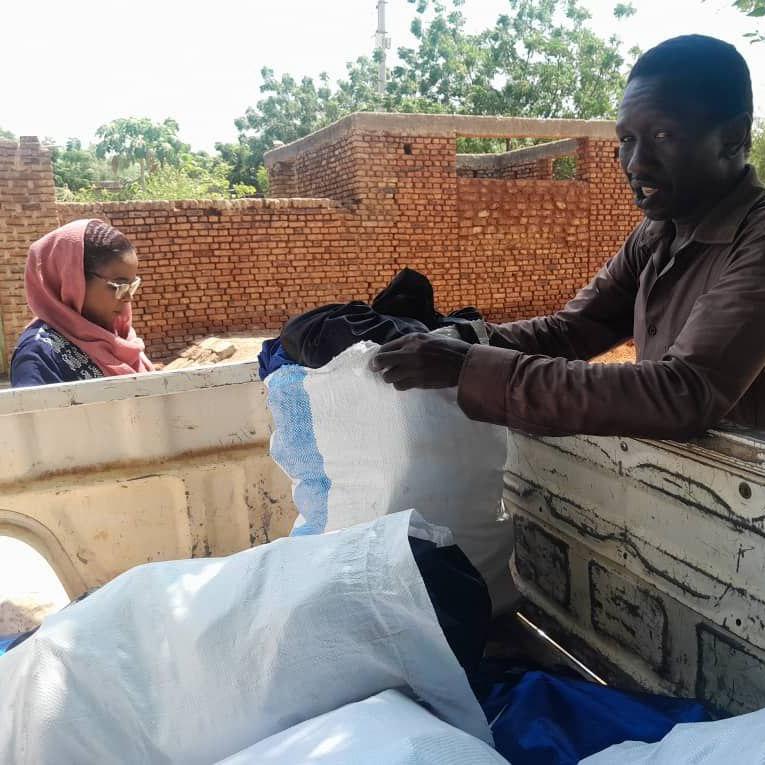
Noha told us about her work in the displacement camps between April 18 and October 19, 2023: “I was primarily responsible for four displacement camps. These camps provided daily health services like a mobile clinic located in one of the camps. We responded to childbirth cases and there were also cases of miscarriage during the displacement. Later, infections among children, skin diseases, and malaria appeared. We responded to all these cases, providing medications and tests. All of this was provided while I was working primarily in four displacement camps, and we also extended our services to other camps.” The type of work Nuha did in the Emergency Room became the focus of attention for the authorities in Sennar as the state of alert increased and the security situation deteriorated with the war. “The war affected all Sudanese people, especially when it comes to safety. Security measures were not enough. While working in the Emergency Room, I faced constant harassment from intelligence and security forces, which ultimately forced me to leave the country.”
After the war reached Wad Madani, it became difficult to continue volunteering. Here, the SAF and RAF fought to take over control of the capital of Gezira State in east-central Sudan in late 2023. Noha decided to leave Sennar with her two children and set Kampala as her next destination via Port Sudan. Noha prepared for the trip for two weeks, carrying many concerns about the road and the unfamiliar city ahead.
“The destination itself felt daunting — it was a place we had never been before, with limited immigration pathways and almost no Sudanese community to lean on. There was a great deal of fear because we were stepping into a place we knew nothing about. We had no idea how we would manage our lives there. On top of that, our ties to our country and our families were strong but no one else from our family was coming with us. I was traveling with my children, carrying not only our bags but the weight of uncertainty — unsure of what we would encounter or how we would overcome the challenges ahead.”
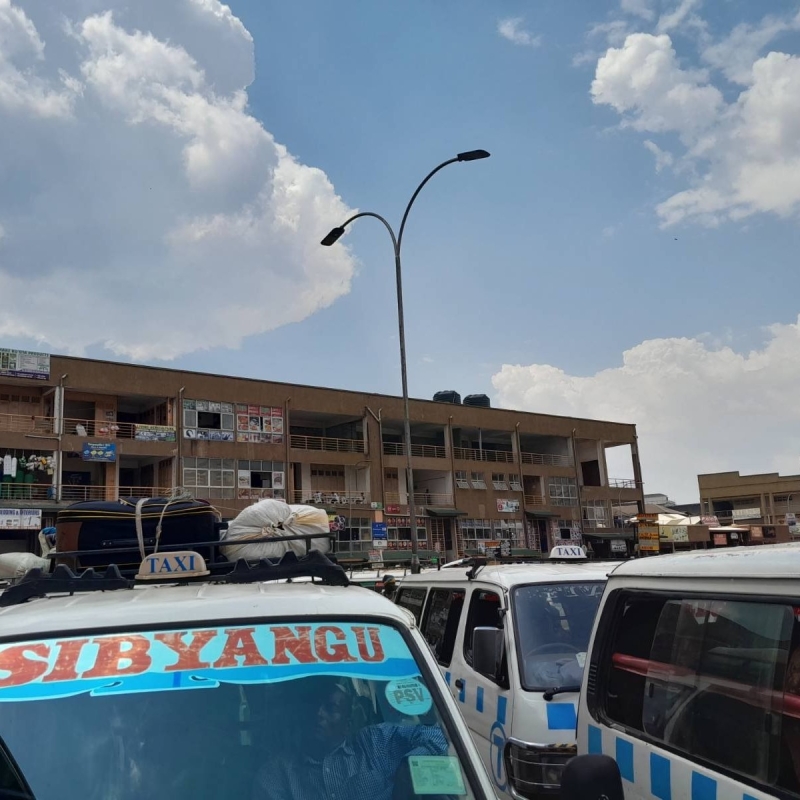
The journey of displacement was neither easy nor without threats. Noha worried about being stopped or targeted along with her two children. And she also carried the constant anxiety of running out of money before reaching Kampala.
“This journey’s biggest challenge was the feeling of being constantly watched, knowing that at any moment you could be stopped by the security or intelligence forces. That is a frightening thought, especially when you have children with you. The journey to Port Sudan was lined up with checkpoints and the treatment of displaced people at these checkpoints, in Noha’s words, “unacceptable”. From Madani to Port Sudan, there were perhaps more than 15 or 17 checkpoints, sometimes less than 100 meters apart. At each one, all passengers were ordered off the bus and searched thoroughly — men and women alike.
“The hardest experience for me was seeing my son Ahmed being subjected to such a dehumanizing experience. It was the first time it happened to him and he was so young. During our escape journey to Kampala, he was subjected to 15 or 17 searches, and once, his bags were thrown out.”
Finally, Noha and her two children arrived in Kampala, safe and far from the war and deadly clashes. However, she feels a deep guilt at not being able to provide the same level of support she offered to people while in Sennar, especially since Sennar State was witnessing fierce clashes between the SAF and the RSF. Human rights organizations have accused the RSF of killing civilians in the city of Al-Suki. Noha remains worried about her family in Sennar and is now juggling following the news in Sudan, adapting to a different society and culture, and working hard to give her children an education – as well as helping them to heal the scars left by the war.