
NEWS
Women in Displacement: Sudanese Dispatch on Aid Corruption
The golden sands and hopes of the eastern Wadi Fira in Chad bring us together with Fatima Fadil Jasser, a journalist displaced in the Toloum refugee camp – where tents are dilapidated, resources are scarce, and survival is not guaranteed. Despite being displaced from El Fasher right at the start of the war, Fatima’s resilience has stayed with her throughout her perilous journey from North Darfur. Forced to leave her home and family, giving up was never an option.
Water and food are not readily available and the water is undrinkable – everyone suffers from thirst and hunger. “Touloum camp is an example of thirst, hunger, and oppression. I never expected that a day would come when I would be living in a refugee and displacement camp. I used to document these cases. The economic situation is vile; I suffered greatly during the first three months of displacement.”
Fatima Fadil Jasser is from El Fasher, North Darfur. She is a wife, a journalist, and an activist. As a reporter, she specializes in covering conflicts and wars. As an activist, she is the founder of the “Women Gender Peace Initiative” and also volunteers in the field of human rights, with an interest in women’s and children’s issues.
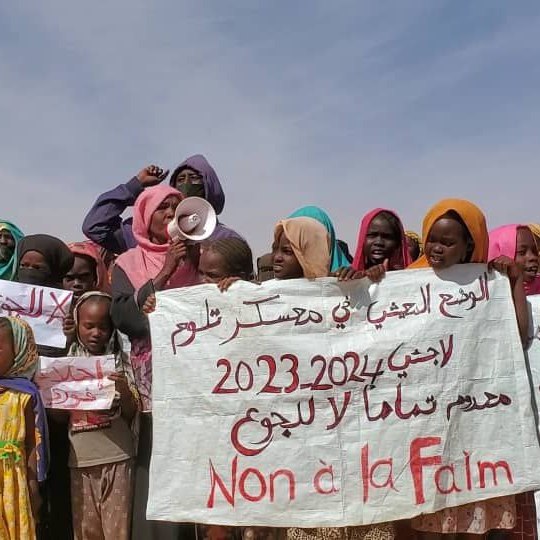
Banner reads: “The living situation in Touloum Camp. Refugees 2023–2024. Deprived of food and suffering hunger. No to Hunger.”
On the first day of the war, Fatima was at the General Command headquarters in El Fasher. She was witnessing a sit-in and a meeting between the governor of North Darfur and the commander of the Rapid Support Forces (RSF). She was in the middle of a sensitive location with two female colleagues, and the war was about to begin. Suddenly, clashes erupted on the northern side of the headquarters. Fatima stood there, her heart pounding, her eyes scanning the events unfolding around her. Bullets flew through the air and shells exploded in the distance. It was the first time Fatima had witnessed such violence, and she felt panic creeping into her veins. She tried to remain calm, her eyes searching for a safe haven. After the clashes subsided, Fatima and her colleagues left the area, trembling subtly, but determined to return home.
Displacement from Khartoum quickly became inevitable, especially after Fatima documented the violations suffered by citizens in the early months of the war. “Before I became a refugee, I was displaced from El Fasher North to El Fasher South because of threats after my cousin was killed. After writing an article about the murder, I was threatened. My family then decided to leave home, and with the conflict continuing for more than 6 months, we decided to travel to the nearest country.”
The war led to the closure of many print and broadcast media outlets, with some transitioning to online publishing. Since then, print newspapers have disappeared and printing presses have ceased operations – right at a time when readers desperately needed reliable information, as it was the most direct means of communication with the public. Furthermore, some channels relocated their broadcasts outside the country.
The situation for journalists worsened daily, forcing them to pursue alternative professions. Fatima Fadil Jasser recounts this new reality, “To have some financial dignity, I worked selling falafel during the first three months of my displacement. I didn’t have a grinding machine available and the income was meager. I also worked extracting gravel for concrete and selling it, but I received no payment. I was cheated.”
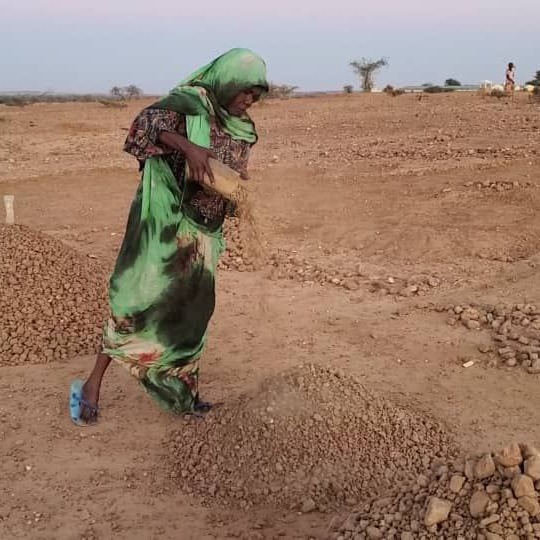
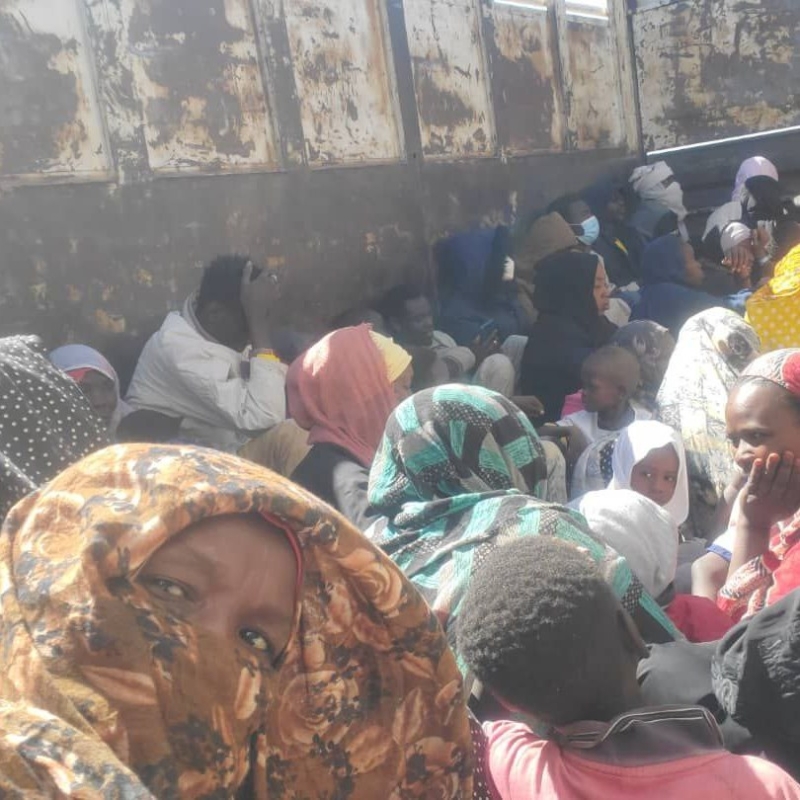
Fatima still faces harsh conditions in the Taloum camp for displaced people, where the severe shortage of water and food is leading to diseases outbreaks such as cholera. “We live a simple life and lack the most basic necessities. Without available water, we are forced to drink from groundwater wells meant for animals, which are unfit for drinking because they contain a lot of silt. Often, we have to go to camps for refugees who have been there since the 2003 war to get water. Here we are not welcome. Causalities and conflict are common. Another hardship is the lack of food. During all this time, we have received only two food quotas. Families cannot rely on anyone except themselves. The living conditions are atrocious.”
As she tried to change the conditions in the camp, frustration grew, so she leaned into her journalistic practice to cover the facts, fight disinformation, and share the suffering of the displaced people.
“I reported on water, delays in food distribution and humanitarian assistance, the security and economic degradation, and, in particular, the situation of women inside the camp. I also covered the struggles of disabled people. The appeal was that this segment of our community must be supported, but until now, no one has done so.”
The Sudanese Journalists Syndicate described as extremely severe the threats against journalists and the attempts to silence them, to prevent them from expressing their opinions. It added that it is taking the matter very seriously and warned against exploiting the war through intimidation, politicized accusations of treason, and systematic censorship. The syndicate emphasized that the ongoing war in Sudan is putting the lives of Sudanese journalists at risk. Fatima shared a similar view: “I believe the biggest threat to my life inside the camp is the security situation. I sleep outside my designated tent; sometimes I go to neighbours’ houses and return to the camp in the morning. The second biggest challenge is the economic situation: I support my immediate and extended family who are with me in the camp. My mother used to pray for mercy and forgiveness for me, expecting me to die at any moment, to be assassinated or attacked.”
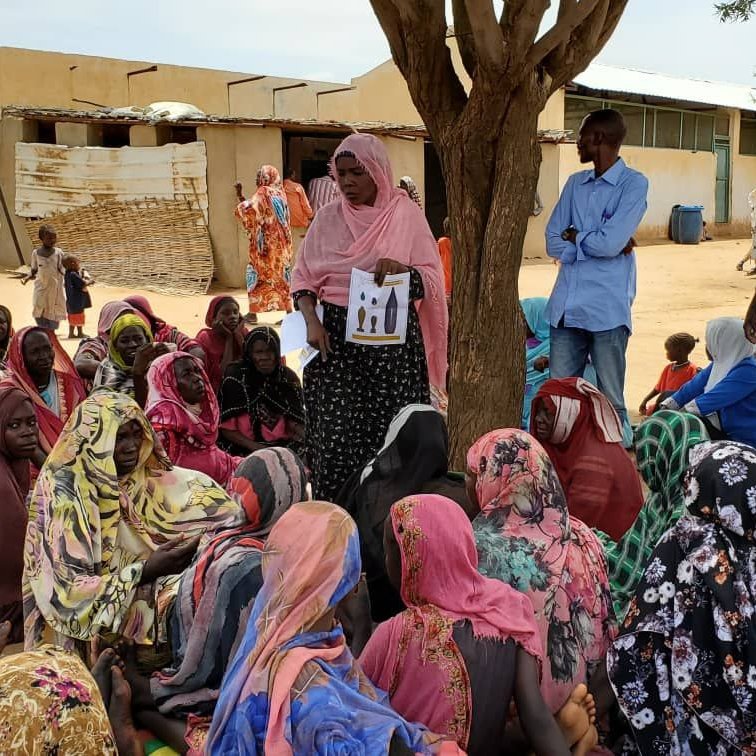
Fatima did not stop at journalistic work. She also started a feminist initiative through which she seeks to provide psychological support to displaced women and children in the camp.
“Women Gender Peace Initiative provides bespoke psychological support to women, girls, and children, addressing gender-based violence within the camp. With the contribution of colleagues, they look for support to continue the initiative’s journey.”
Fatima believes that to stop the ongoing conflict in Sudan, both sides must make concessions. She says the war has burdened all Sudanese people, and that displaced people must return to their homes, so they can begin their journey of physical and psychological healing. “The dragging on of the conflict affects social, economic, marital, and health. It affects all aspects of life,” she says. “Once I achieve financial stability, I will consider seeking psychological treatment.”
We backed Fatima where and when it mattered most. Through ICMAC, we helped her to keep reporting on how corruption in humanitarian aid distribution shows up in everyday life, from the missing rations to the delays, the gatekeeping, and the quiet intimidation that turns survival into hide and seek. We strengthened her ability to investigate and document corruption-linked harm with practical journalistic support, a safer route to publication, and the credibility that comes from being part of a wider accountability effort — and that opened the door to stories that some people would rather stayed buried.
We also widened the circle around her work. ICMAC was built to empower media, civil society, and legal actors to hold perpetrators accountable for human rights violations linked to corruption, so we positioned Fatima’s reporting as evidence that communities can use — something that can travel beyond a single article into civic awareness, advocacy, and action. By linking her dispatches to broader networks and accountability pathways, we helped ensure her voice could protect women in displacement as well as inform the public.